
Key features
180° × 140° FOV
widest in the FTX family
Fully Solid-State
no moving parts, self-developed chip
IP6K9K Rugged
−40 to +85 °C, rain/fog resilient
<6 W Power
60 × 38.7 × 55 mm, 180 g
20 m Near-Field
±3 cm, no trailing points
About this product
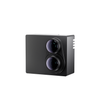
The Hesai FTX180 is a fully solid-state, ultra-wide blind-spot LiDAR with no moving parts — the widest field of view in Hesai's FTX family at 180° horizontal × 140° vertical. Compact and rugged (60 × 38.7 × 55 mm, 180 g, IP6K9K, −40 to +85 °C) and drawing under 6 W, it is built to bolt onto the sides, rear, and corners of mobile robots and vehicles to eliminate near-field blind zones.
Its self-developed chip delivers a clean, dense point cloud at 0.62° resolution and ~430,000 points/s with ±3 cm (1σ) accuracy, plus strong rain/fog resilience and no trailing points for algorithm-friendly perception. With a 20 m range optimized for close coverage and a 100BASE-T1 automotive Ethernet interface, the FTX180 is ideal for AGV/AMR collision avoidance, vehicle blind-spot coverage, room and zone surveillance, people counting, and industrial safety zones.
Resources & downloads
Official documentation, SDKs and developer references for this product.
- FTX180 User Manual (PDF, rev F07-en-260520)Full specifications, installation, interfaces and operation
- Additional documentationAvailable on request →API references, 3D models and safety manuals on request
- Hesai Developer PortalDocumentation hub for SDKs, ROS drivers and sensor protocols
- HesaiLidar_SDK_2.0 (C++)Official C++ SDK for point-cloud parsing and sensor configuration
- HesaiLidar_ROS_2.0Official ROS / ROS 2 driver built on the SDK
- PandarView 2 (viewer tool)Available on request →Point-cloud visualization tool for Windows and Ubuntu
- LidarUtilities (config tool)Available on request →Sensor configuration and diagnostics utility
- Firmware updatesAvailable on request →Version-specific firmware packages for your unit
Ready to talk robots?
Tell us about your application and we'll match the right Unitree platform — or design a custom integration around it.